



Article: Strong Voice Interview #45: Anna Weber
Strong Voice Interview #45: Anna Weber
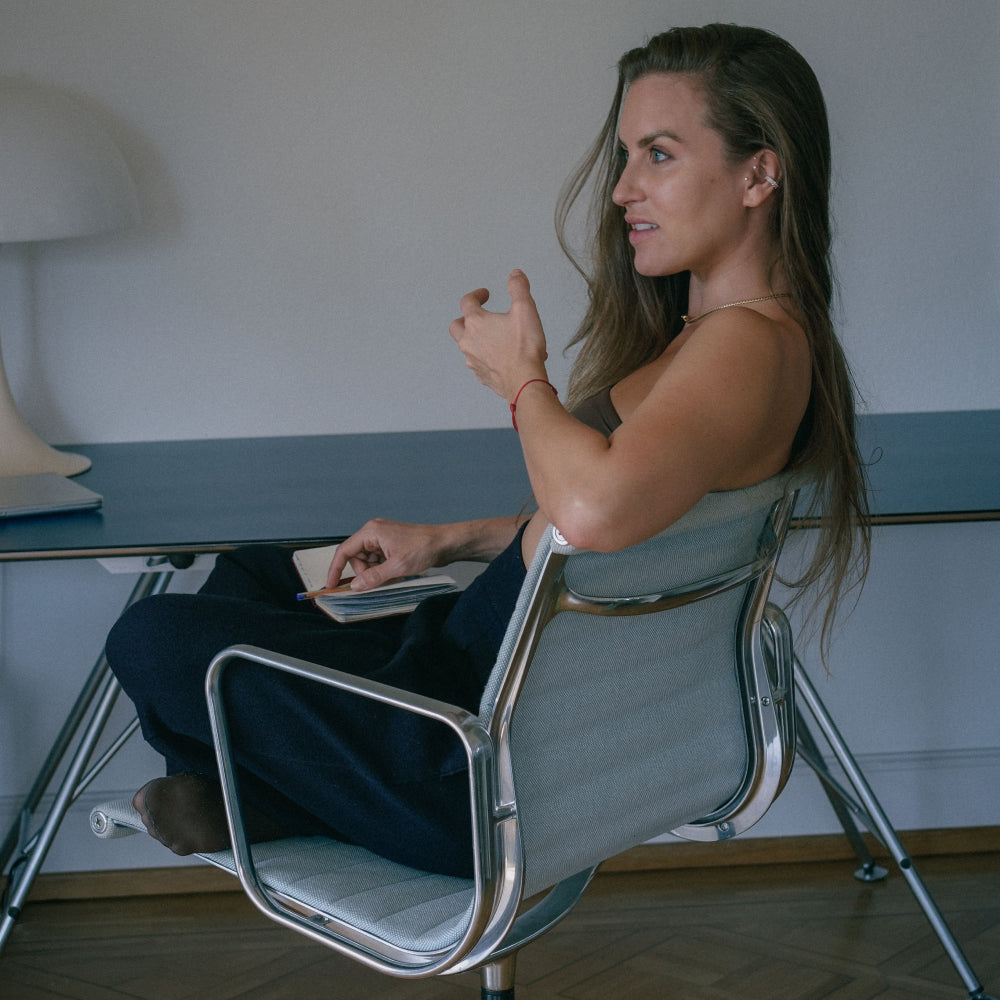
Anna Weber is a family business entrepreneur, supervisory board member, and former Co-CEO of BabyOne, one of Germany's leading baby retail chains with more than 1,400 employees across 104 locations. She believes that commercial success and people-centered leadership are not mutually exclusive. During the COVID-19 pandemic, she and her team drove the company's digital transformation at an extraordinary pace. Today, she serves on advisory and supervisory boards and advocates for a new kind of leadership—one that is grounded in clear values while remaining deeply human. As a mother, she is convinced that parenthood strengthens qualities such as pragmatism, focus, and the ability to let go—skills that are often underestimated in business.
In this Strong Voice Interview, Anna Weber talks about why successful leadership requires both warmth and clarity, how she repositioned BabyOne during the COVID-19 pandemic, and why she believes motherhood is one of the most underrated competitive advantages in leadership.

You run a family business at a time when the world of work and expectations are changing rapidly. What truly drives you as an entrepreneur today?
I am driven by the conviction that how we lead matters just as much as what we decide. I see a strong desire for leaders who are clear without being cold—leaders who stand by their values while also listening. I want to demonstrate that business success and humanity are not contradictions.
At the same time, I am deeply concerned about Germany's demographic development. Declining birth rates are a major challenge, and I believe we need to have a much more serious conversation about this as a society.
How has your understanding of leadership changed over the course of your career — and what does good leadership mean to you today?
I want to work with people who don't just do their jobs but genuinely love what they do. To me, that requires two things: warmth and clarity.
One of the most important lessons I've learned is that toxic harmony is more dangerous than open conflict. Avoiding difficult conversations prevents growth. It's stagnation wrapped in politeness. Honest feedback can be uncomfortable, but that's precisely where real appreciation lies.
Today, I communicate more clearly and make decisions more consistently. One example was our decision to return to mandatory in-person work after experimenting with "Work from Anywhere." Not everyone welcomed the change, but I firmly believe that structure creates trust—even when it feels uncomfortable at first.
What does success mean to you personally today — beyond revenue, growth, or classic KPIs?
Today, success means seeing people grow through working with me. It means watching them take on more responsibility, become more courageous, and achieve things they never believed they were capable of.
I'm proud of the size and success of the company I had the privilege to help lead. But what I remember most are the moments when employees exceeded their own expectations—not because I taught them how, but because together we created an environment where growth was possible. That's my true measure of success.
Building on a company with history also comes with emotional pressure. How do you handle that responsibility?
Responsibility is not something that happened to me—it is something I consciously chose.
Being an entrepreneur means making decisions and standing by their consequences. That can be demanding, but the freedom to shape the future is also an extraordinary privilege.
To me, freedom and responsibility are two sides of the same coin. If you truly want the freedom to create, you also have to be willing to take full responsibility for your decisions. I believe that is one of the greatest differences between entrepreneurship and almost anything else. And yes, it comes at a price. There are nights when difficult decisions keep you awake, moments when you're unsure whether you've made the right call. That's part of the journey. But I would choose it again without hesitation.
What helps me are clear structures, open communication, and people I trust. Responsibility becomes lighter when you don't carry it alone.
Was there a decision in your career that felt both right and frightening? What helped you make it anyway?
Without a doubt, COVID-19 was the greatest challenge we ever faced. Within a very short period, more than 95 percent of our revenue disappeared.
Instead of clinging to the old way of doing things, we completely rethought our business. We rapidly expanded our online operations, transitioned employees into digital customer consulting, and introduced new services such as WhatsApp consultations. These were things we had never done before, and we had no idea whether they would work. We simply tried them.
It was frightening—but our greatest strength was our team. Nobody asked whether something was possible. Everyone focused on finding solutions and refused to let the situation paralyze them.
Has motherhood changed how you set priorities or make decisions?
For me, the question was never whether family and entrepreneurship could coexist. Both have always been part of the life I wanted.
What has changed is my approach to structure. Having children means making decisions more quickly and pragmatically because there often isn't another option. That has made me more efficient.
At the same time, our family shows that roles don't have to follow traditional patterns. My husband takes on most of the organizational responsibilities at home.
I also believe that parents—and mothers in particular—bring qualities to leadership and entrepreneurship that are significantly underestimated: the ability to keep multiple priorities in view at once, pragmatism, the willingness to let go of what isn't essential, and a very clear understanding of what truly matters. These aren't soft skills. They are competitive advantages.
What would you tell women who want a lot — professionally and personally — and sometimes feel like they're constantly navigating between expectations?
First: stop apologizing. For being ambitious. For wanting a successful career. For wanting a family. Or for wanting both at the same time.
Second: build a diverse network. Don't surround yourself only with people who are just like you. The most interesting conversations often happen where you initially feel a little out of place.
Third—and perhaps this is the most uncomfortable one—take a close look at yourselves as well. Structures matter, but we sometimes reinforce traditional role models ourselves.
And finally: trust your own judgment. The decisions that feel both right and frightening at the same time are often the ones that matter most.